
Slow Simmered Homemade Ham Stock
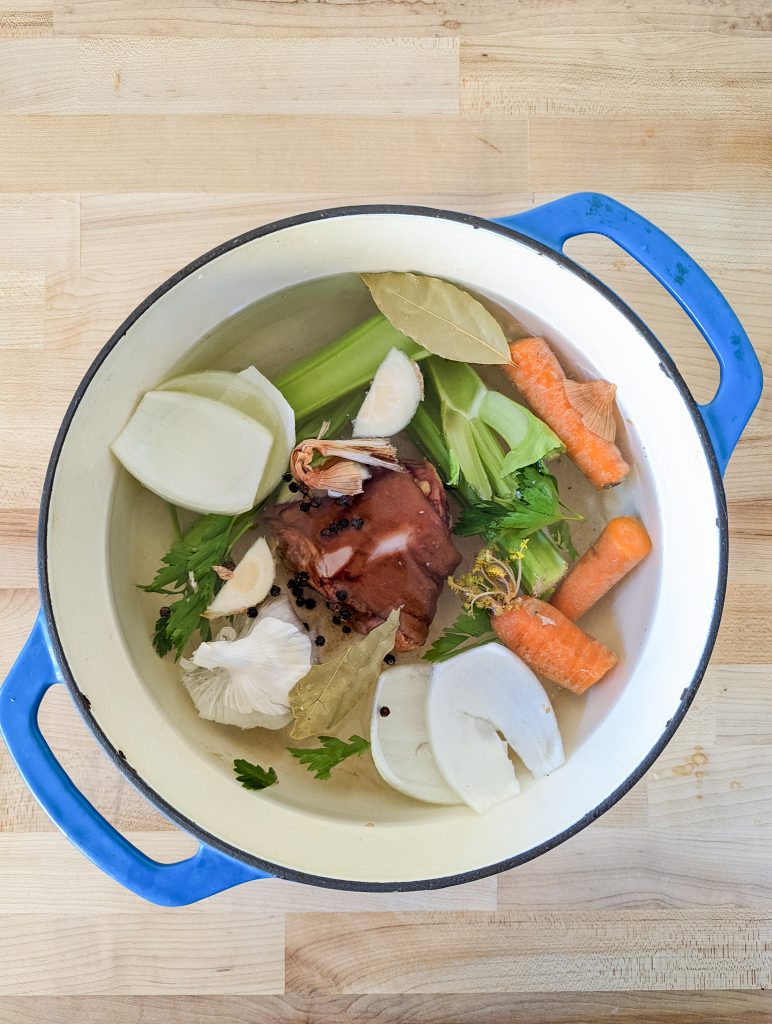
Have a leftover ham bone? Learn how to easily make ham stock. Ham bone broth is delicious, has rich flavor and is the perfect base for soup or gumbo!
I think most of us are familiar with making homemade chicken stock, but have you ever heard of making ham stock? The process is super similar, but I would argue that the results are even BETTER.
Homemade ham stock has a richness that you don’t find in other stocks. It’s comforting, velvety and salty. It makes any recipe you use it in better! Soups of course, but also gravies and risotto can get a big flavor boost by adding a ladle of rich ham stock.
You may be surprised to know that the richness comes from collagen. Yes, the thing we buy powdered as a supplement! Collagen is extracted from the bones during the long simmer time. It turns out that Grandma knew what she was doing!
Most ham soup recipes call for chicken broth, and that is okay! It is definitely easier to source chicken broth from the grocery store.
But if you’re up to it, I promise that using homemade ham broth will take your bean soups to another level. It can take a great recipe to a FANTASTIC recipe. Your family won’t be able to put their finger on why it tastes so good, it just will.
I like to use homemade ham stock in my Ham and Cabbage Soup recipe. I also put a ladle into my pasta sauce (seriously) and use it to cook rice and risotto to add richness and nutrition, because ham stock is super high in collagen!
Whether you’re making Ham and Potato soup, Pea Soup, or White Bean Soup, it will be made more delicious with this homemade stock.
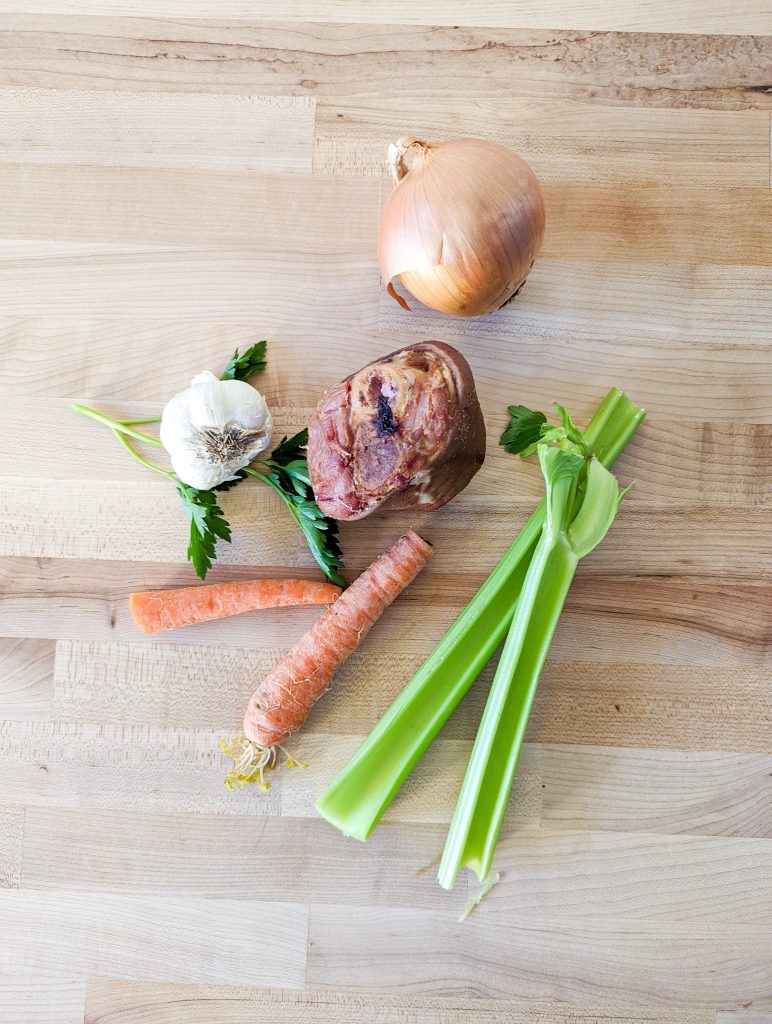
This ham stock recipe is a great way to use leftovers! The vegetables you use do NOT have to be pretty! I essentially use scraps, the tough outer peels of onions, old garlic with the skins still on, scraps of carrots and celery.
For the ham bone, you can use the center bone from your holiday ham from Christmas dinner! Or you can purchase a smoked ham bone or ham hock from your butcher counter.
When you use scraps to make broth, it’s basically free food, because you’re making something out of the things you’d normally discard! I love to do it.
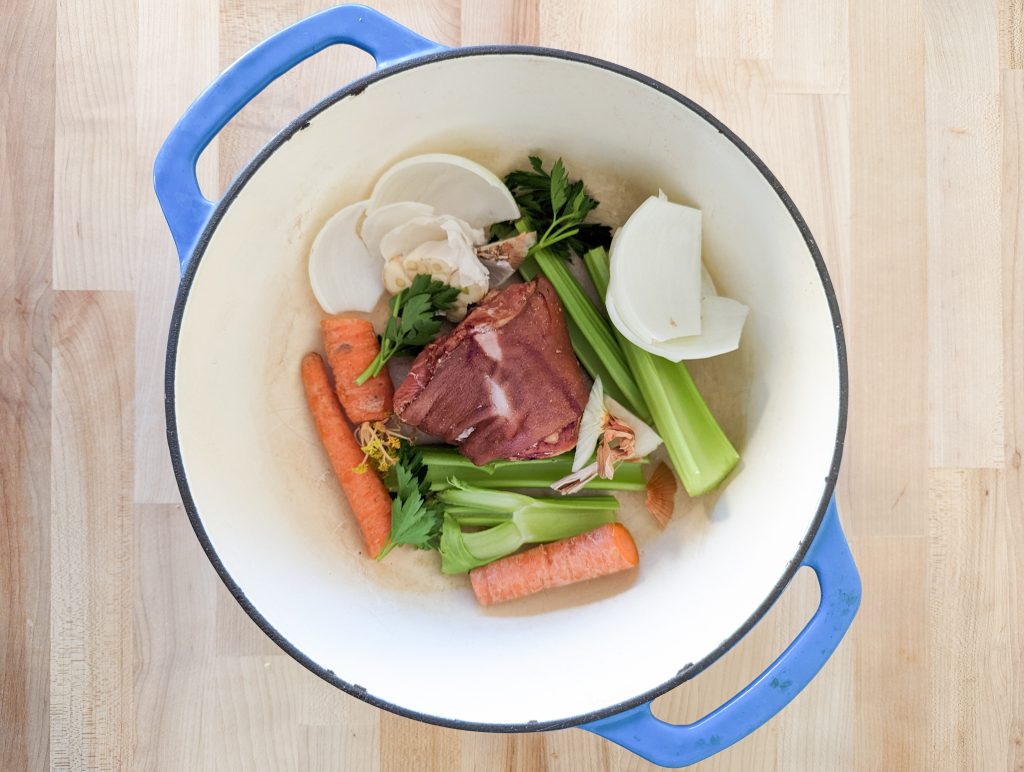
If you use a bone that still has meat on it (like a smoked ham hock), be prepared to the skim top of the liquid often to remove fat, at least once per hour of simmering.
Ham Stock Ingredients
To make your own ham stock, you will need:
- Smoked ham bone or leftover ham shank
- Garlic cloves
- Carrots
- Celery
- Pieces of onion
- Whole black peppercorns
- Bay leaves
- 8-10 cups water
I did not have veggie scraps to use when making this batch, but you’re welcome to substitute the raw veggies in this recipe for scraps! Carrot peels, celery leaves and onion and garlic skins are all wonderful substitutions.
How to Store Homemade Ham Stock
You can store this homemade ham stock in an airtight container in the refrigerator for up to 5 days or freeze it for up to 4 months without loss of quality.
I like to freeze my stock in ice cube trays, then dump the cubes into a large Ziploc bag to keep in the freezer. This allows me to grab just as much stock as I need! Even one cube of ham stock can add a ton of depth to a recipe.
As your ham stock cools, it may firm up and become a bit like Jell-O. This is a good thing! It shows that you extracted a ton of collagen and made a good, rich stock. Well done!
I hope that you enjoy this delicious homemade ham stock! If you make it, I’d love to hear how it went in the comments below.

How to make Homemade Ham Stock
Ingredients
- 1 smoked ham bone, or leftover ham shank from spiral ham
- 1/2 garlic bulb
- 2 small carrots
- 2 celery stalks
- 1/2 white or yellow onion
- 1 tablespoon whole black peppercorns
- 2 bay leaves
- 8-10 cups water
Equipment
Instructions
- Place ingredients into a large stockpot or crockpot.
- Fill with 8-10 cups of cold water, enough water to cover all of the ingredients completely.
- Set your stovetop burner to a low heat and bring the liquid to a low simmer. Or, set your crockpot to low.
- Allow to simmer (stovetop = 4 hours, crockpot = 8 hours or overnight) partially covered, scraping the fat off the top of the stock with a slotted spoon at least once per hour.
- Pour through a fine-mesh sieve or cheesecloth to strain off all impurities.
- Allow stock to cool completely before storing.