
Easy Homemade Potato Gnocchi
Learn how to make homemade potato gnocchi from scratch with just 3 ingredients. Pillowy, light, and ready in under an hour. No pasta machine needed!
The first time I made gnocchi, it was a disaster! I used too much flour trying to fix a dough that felt super sticky. They turned out dense and rubbery. It took me a few more batches to realize that the issue was two fold: I was not letting the cookie potatoes steam out to release their moisture, and I was overworking the dough.
Overworking the dough is truly the enemy of good gnocchi! If you’re like me, it’s hard to “do less,” but this is an instance where doing less is the right move.
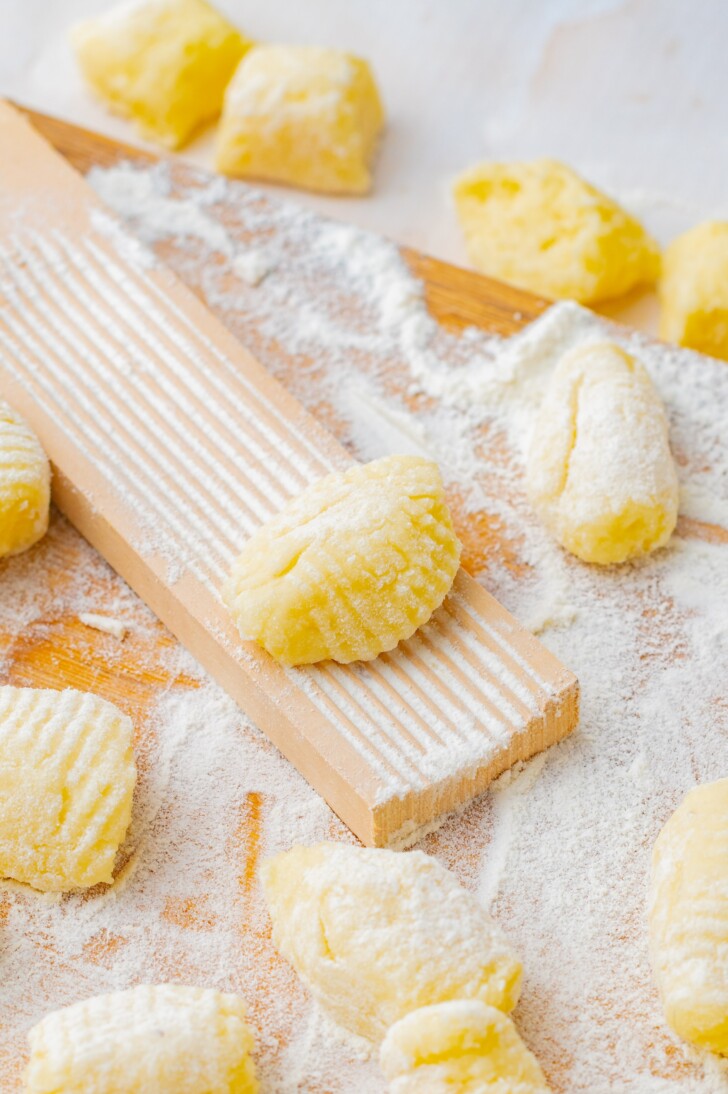
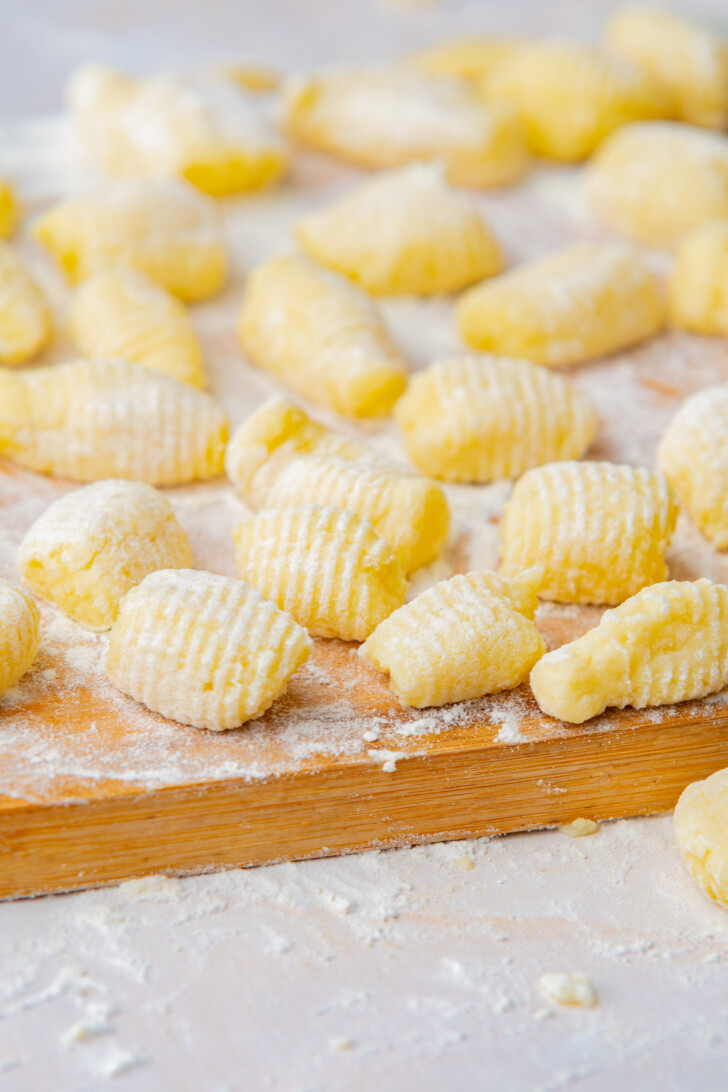
I do recommend a few tools below in the recipe card, but I want you to know that they’re optional! They do make the process a bit easier in my opinion, but you can absolutely make gnocchi without them. Remember, people have been making homemade gnocchi for a long time, and many have had to do it without any specialty tools:
- Bench Scraper: This flat-edged steel scraper helps you work the dough without using your hands, helping you resist the temptation to overwork it. It also helps get up stuck dough from your work surface.
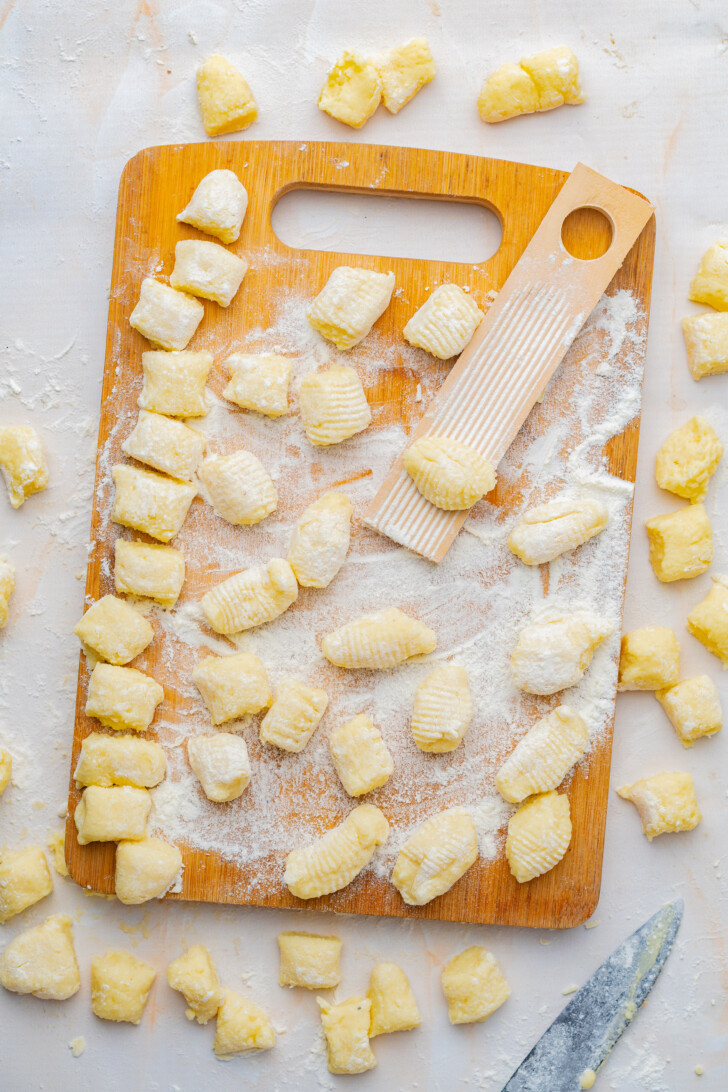
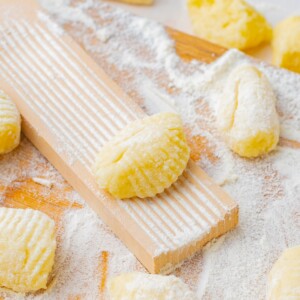
- Gnocchi Shaper: This is a carved piece of wood. When you roll the gnocchi dough over the wood, it places ridges in the dough. You can use a fork instead to attain these ridges, which help the gnocchi hold sauce!
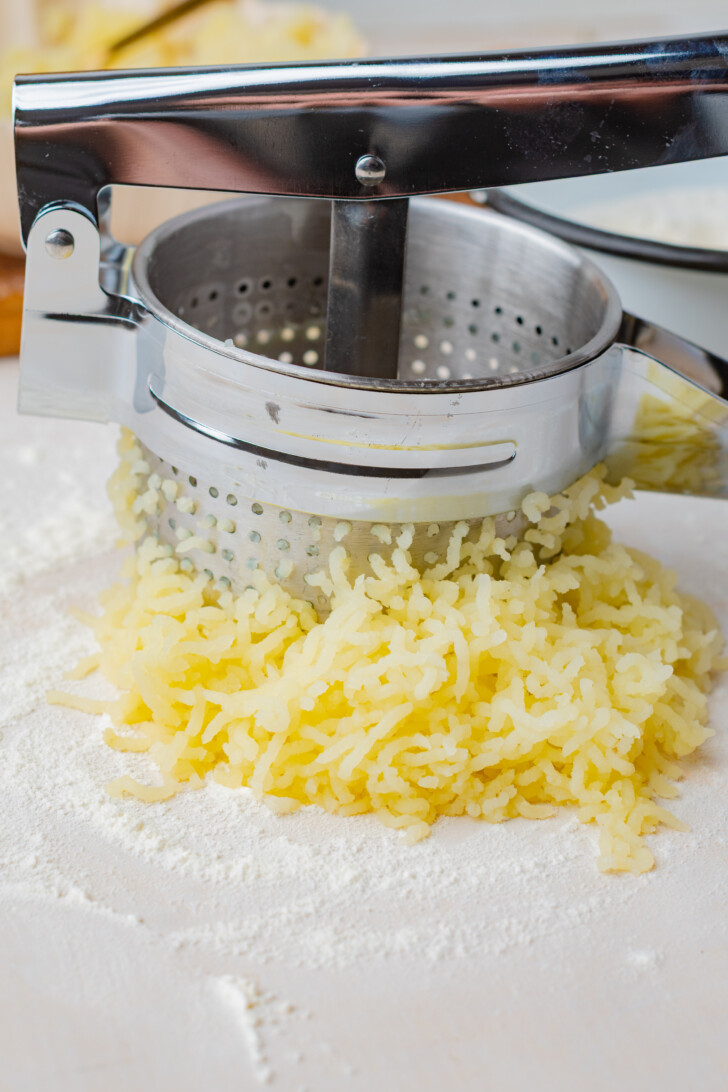
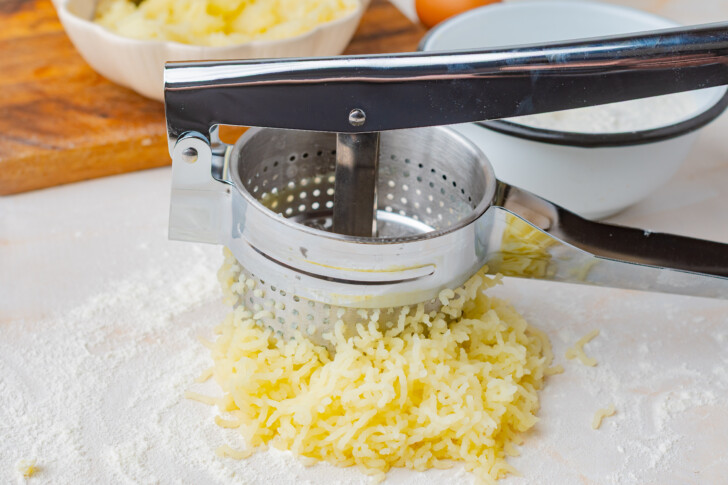
- Potato Ricer: I resisted buying one of these for a long time, but it does help when making gnocchi. You can also use a box grater on the finest setting, but I don’t recommend using a food processor as it will overwork the potatoes into a puree. You still want them a bit fluffy before making the dough.
Ingredient Substitutions for Homemade Gnocchi
Since this is a simple recipe, there aren’t a ton of substitutions available, but I do have a few recommendations:
- You can make gnocchi without the egg! Just replace the whisked egg with 1 tablespoon olive oil. The texture will be less silky, but the gnocchi should still hold together.
- For a gluten-free version, substitute the all-purpose flour with 1:1 GF flour blend. I always recommend Bob’s Red Mill’s version. It’s the best sub that I’ve found! If you’re used to working with GF flour, you know it will be sticky. Make sure your hands are well floured before you start working on it.
- I have not tried this with whole-wheat flour yet. If you do, let me know how it goes, and just keep in mind that whole-wheat flour absorbs moisture better than soft white flour.
Russet potatoes are non-negotiable! Their high starch and low moisture content mean you need less flour to bind the dough. This is the single biggest factor to making light, pillowy gnocchi. Waxy potatoes like Yukon gold or red potatoes hold too much water, which will require more flour, and give you dense gnocchi.
Storing Potato Gnocchi
Please, don’t refrigerate the raw potato gnocchi dough! Shape and cook immediately.
To freeze raw dough, freeze the shaped, uncooked gnocchi on a parchment-lined tray until two hours. Then, transfer to a freezer-safe Ziploc bag and store in the freezer for up to two months. Cook gnocchi frozen, just add 1-2 minutes to the cook time.
Cooked gnocchi can keep in the fridge for up to 3 days. Just toss with a bit of olive oil to keep it from sticking before refrigerating. When reheating, I recommend tossing in a hot pan with butter to crisp them up a bit, or you can just add them straight to your desired sauce.
I know that making gnocchi from scratch for the first time is a little intimidating, but I promise, you’ve got this! If you have any questions, feel free to leave a comment below. I’m happy to help.
Basic Homemade Potato Gnocchi Recipe
Ingredients
- 2 pounds russet potatoes, medium-sized, about 4 potatoes
- 1 large egg, lightly beaten
- 1 teaspoon fine sea salt
- 1 cup all-purpose flour, plus more for dusting
Equipment
- gnocchi roller optional, for shaping
- bench scraper optional, for forming dough
Instructions
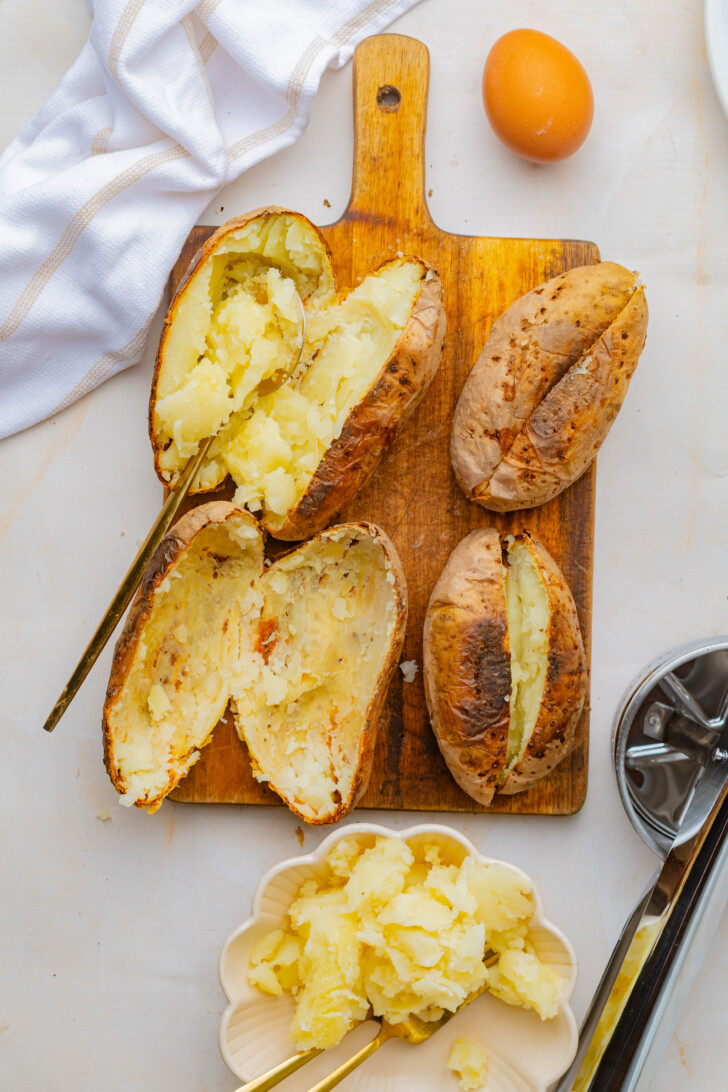
- Preheat oven to 400 degrees Fahrenheit. Pierce each potato several times with a fork. Bake directly on the oven rack for 55-60 minutes.
- Allow to cool for 5-10 minutes. While still hot, halve the potato and scoop out the flesh. Pass through a potato ricer onto a clean floured work surface. Spread out the riced potato and let it steam off for about 5 minutes. This will help the potato dry out, which means you'll need less flour.
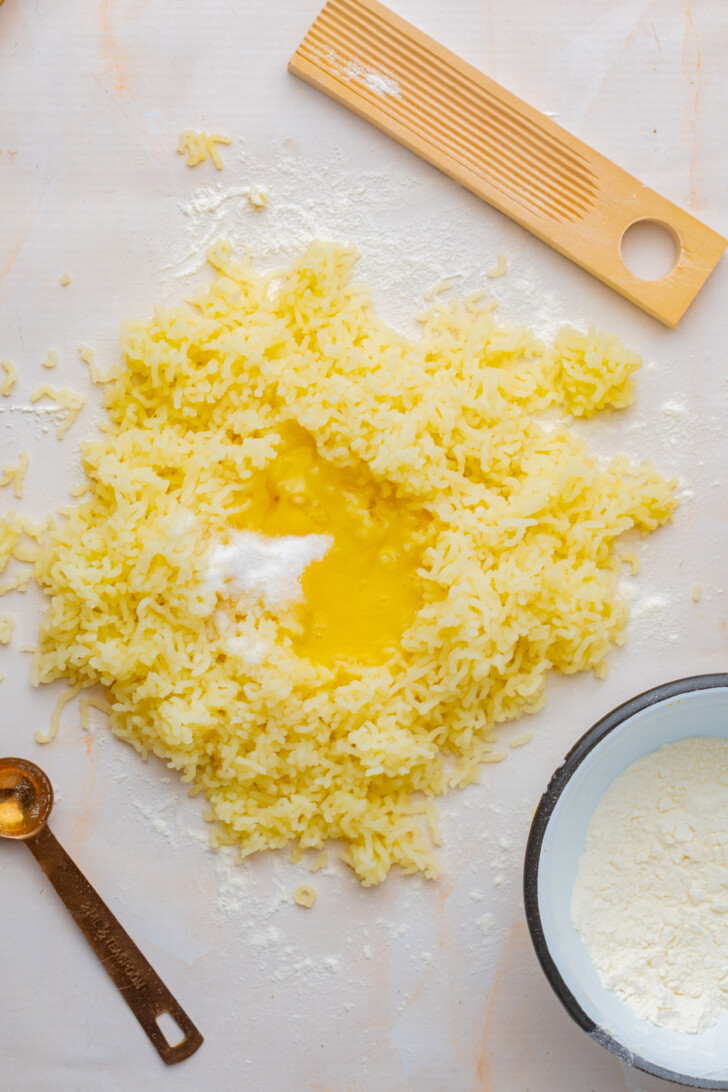
- Gather the riced potato into a circle, then make a well/dent in the center. Into the well, add the beaten egg and salt.
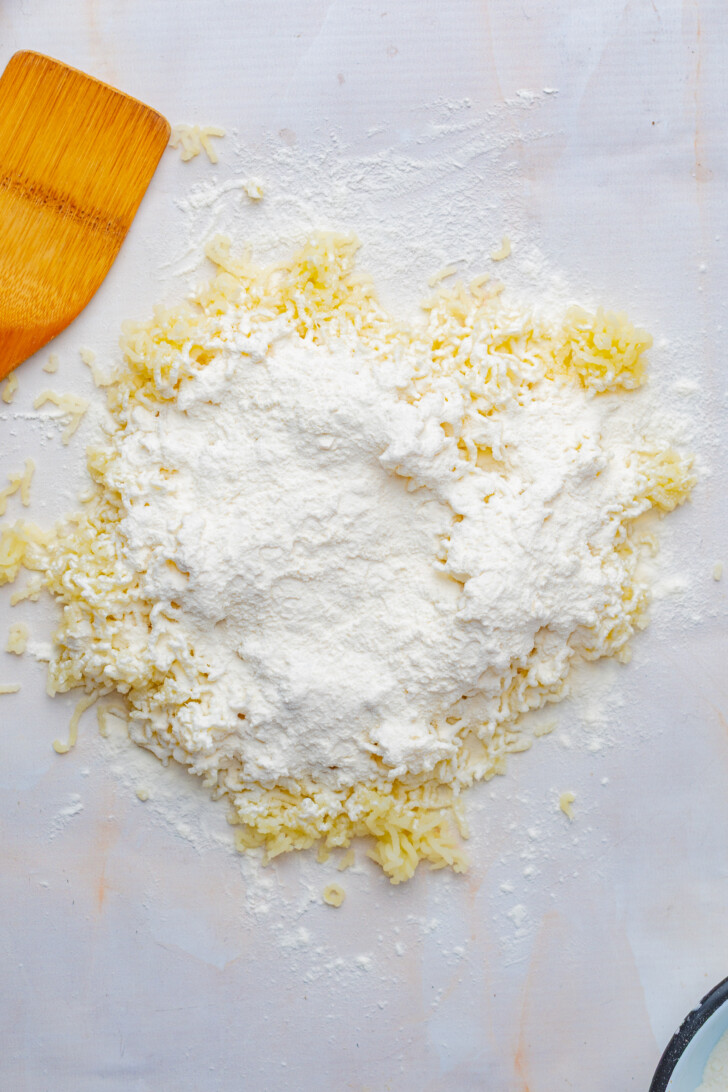
- Sprinkle 3/4 cup of flour over over the top. Using a bench scraper or your hands, fold everything together with light pressure until a dough just begins to form.
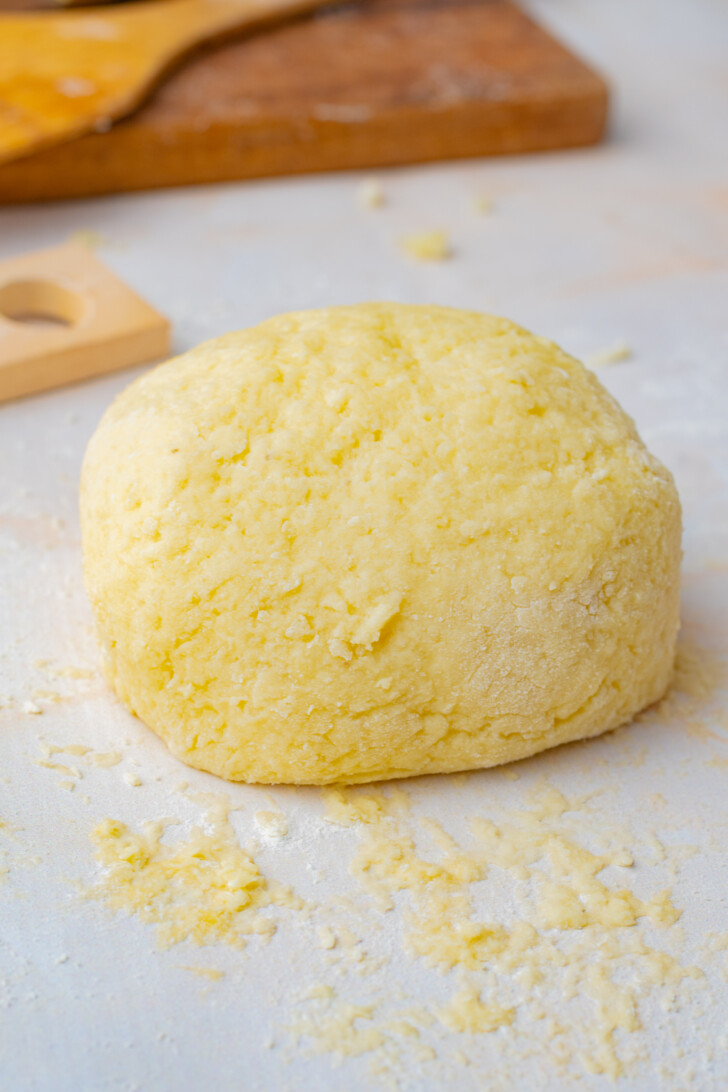
- Add the rest of the flour one tablespoon at a time, until the dough no longer sticks to your hands.
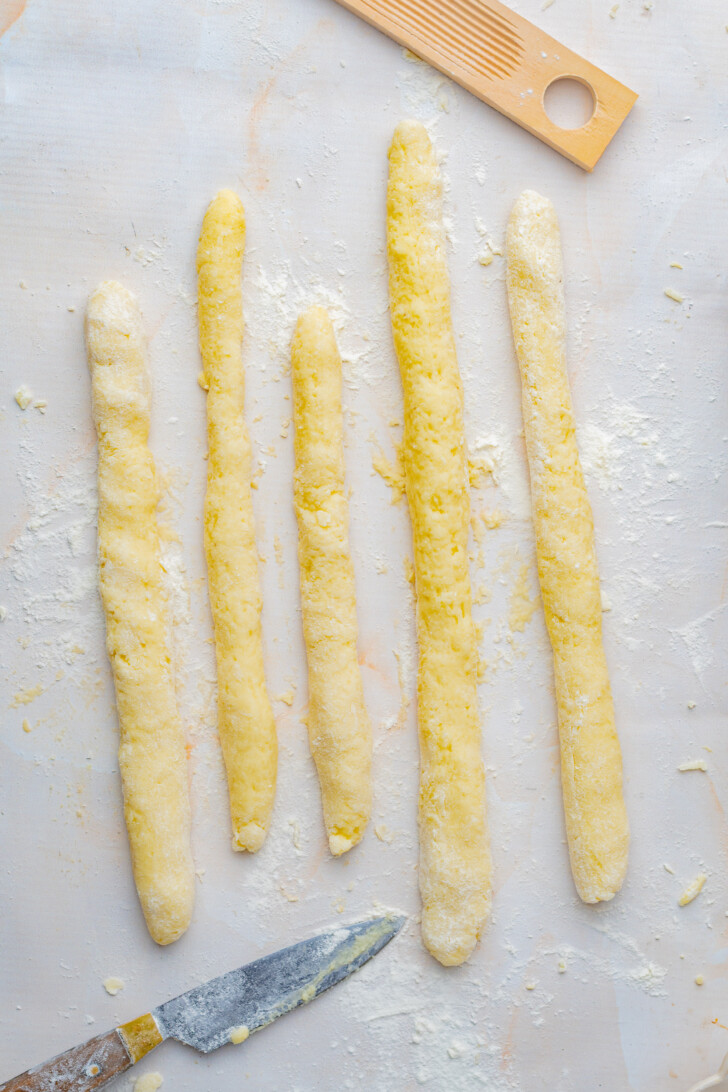
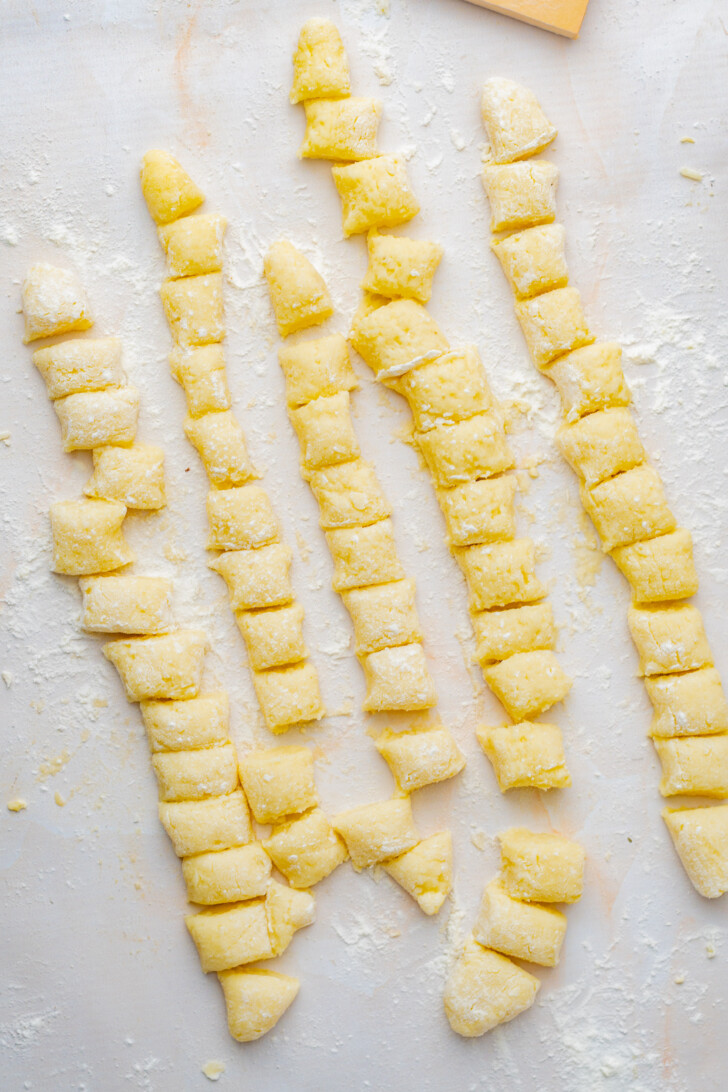
- Divide the dough into 6 equal pieces. On a lightly floured surface, roll each piece into a ¾-inch rope. Cut into 1-inch pieces.
- If desired, shape each piece by rolling it over a fork or gnocchi board.
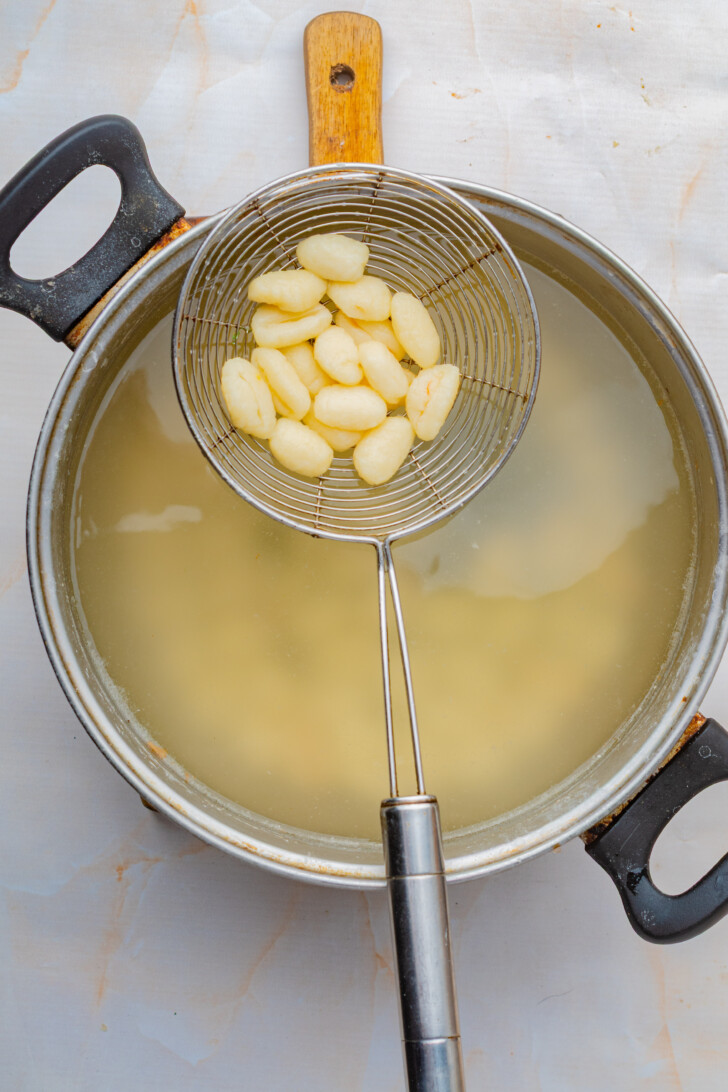
- To cook the gnocchi, bring a large pot of heavily salted water to a boil. Test one gnocchi in the water. If it falls apart, try adding additional flour one tablespoon at a time. Cook gnocchi in batches — do not crowd the pot. Gnocchi are typically done in a few minutes. Remove with a slotted spoon 30 minutes after the float to the surface. I do not recommend pouring them in a colander to drain.
- Toss immediately with your preferred sauce and serve warm.