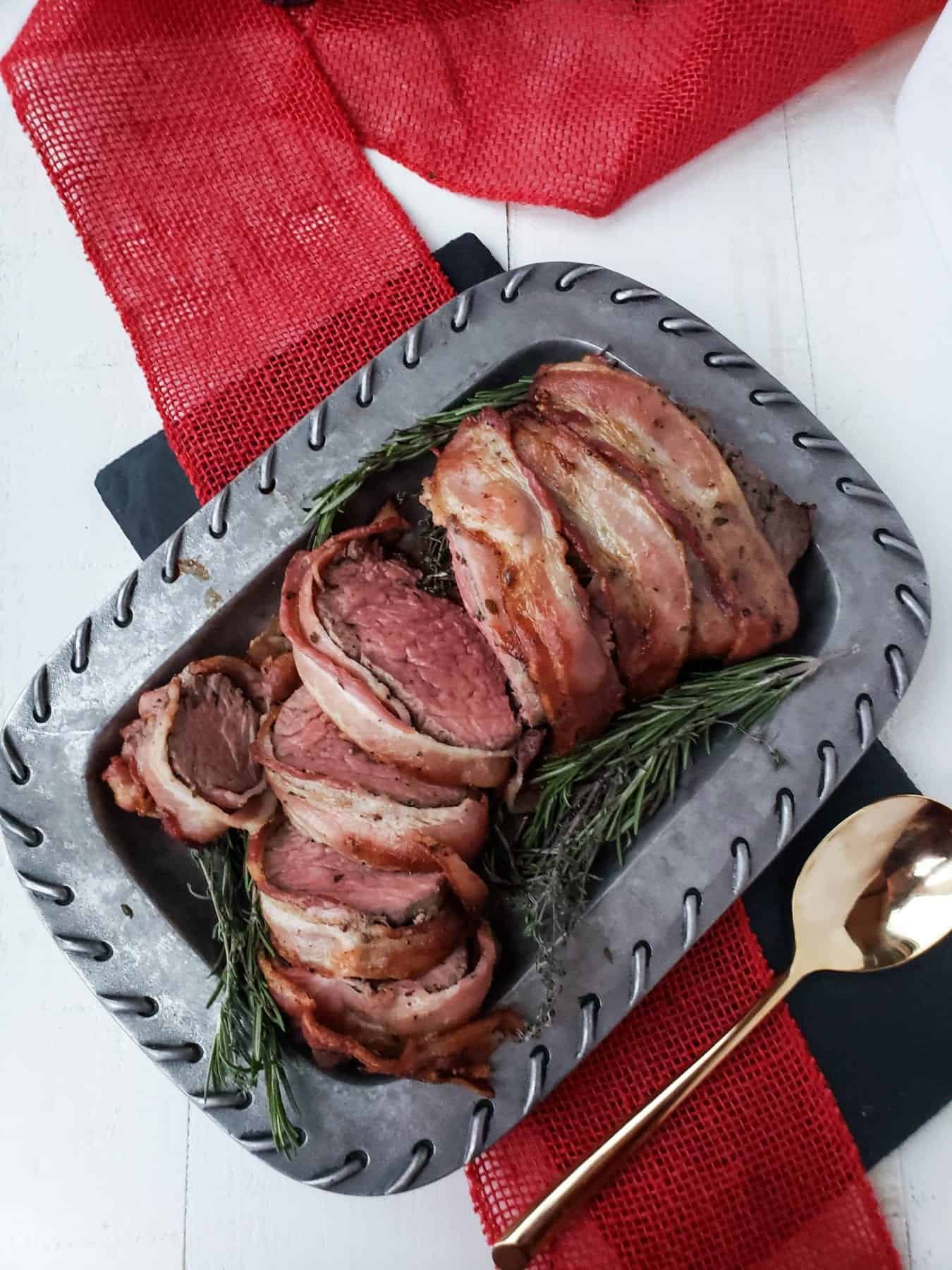
Bacon Wrapped Beef Tenderloin with Balsamic Fig Sauce
This Bacon Wrapped Beef Tenderloin with Balsamic Fig Reduction is a total show stopper! Serve this for a special occasion or holiday meal!
Ingredients
- 1 2.5- pound whole beef tenderloin roast
- 1- pound thick cut bacon
- ¼ tsp salt
- ¼ tsp pepper
- ½ tsp dried thyme
- ½ tsp garlic powder
- 1 cup aged balsamic vinegar
- ¾ cup fig preserves
Instructions
- Place a large sheet or plastic wrap on a large baking tray. Lay the bacon slices horizontally, having each slightly overlap, from one side to the other.
- Rub the beef tenderloin with salt, pepper, dried thyme and garlic powder.
- Place it vertically across the strips of bacon, along the bottom. Roll up the plastic and bacon around the beef so that it is wrapped tightly, and place in refrigerator for up to one hour to allow the bacon to naturally stick to the tenderloin.
- Preheat oven to 375 degrees F.
- Heat a large cast-iron pan or roaster over medium-high heat and add olive oil.
- Remove the tenderloin from the refrigerator and remove plastic. Check the tenderloin for weak spots, where the bacon does not seem secure. Use a toothpick in these areas to fix the bacon to the tenderloin, making sure to keep the toothpick threaded close to the tenderloin (not sticking out).
- Brown the tenderloin in your cast-iron pan or roaster, starting with the seam side. You will need 3-4 minutes per side. If you did not wrap the tenderloin in bacon, reduce the browning time per side by about one minute.
- After each side is browned, transfer the pan to the oven and roast for 25-30 minutes.
- While the tenderloin roasts, add balsamic vinegar to a small sauce pan and bring to a gentle simmer over medium heat, whisking frequently. Allow to reduce for about 10 minutes, until it becomes thick and syrupy in texture. Add fig jam, whisk to combine, and remove from heat.
- Once the tenderloin has reached an internal temperature of 125 degrees F (my preference for medium rare) or 145 degrees F (MBIC's recommendation) from the oven and transfer to a platter or cutting board. Tent with aluminum foil and allow to rest for 5-10 minutes to allow the juices to re-distribute.
- Cut the tenderloin into ½ inch slices and serve warm, with the balsamic fig reduction for topping.
Serving: 1, Calories: 1633kcal, Carbohydrates: 44g, Protein: 107g, Fat: 110g, Saturated Fat: 42g, Polyunsaturated Fat: 55g, Cholesterol: 360mg, Sodium: 1852mg, Fiber: 1g, Sugar: 31g
Did you make this recipe?Please leave a review or share a photo on Instagram.